Write, send, approve, count.
Documents and spreadsheets. Company email. Chat and video calls. Sign-offs on invoices and requests. Bookkeeping. A place for clients to log in. An AI helper that only sees what you hand it.
Melusina is the software a company works in all day. We wrote it, we use it for our own work, and everything HRBR does — setting a company up, running its daily work, handling and raising its money — is built on it. It belongs to two cooperatives, in Utah and Luxembourg, that its users control with 64% of the vote, so nobody can buy it, shut it down or reprice it on you.
Each work object has its own workspace and explicitly granted connections.
Documents and spreadsheets. Company email. Chat and video calls. Sign-offs on invoices and requests. Bookkeeping. A place for clients to log in. An AI helper that only sees what you hand it.
A document, account, conversation or other work object runs in an isolated Pearl. Its owner grants access to people, applications and selected resources.
Run it on infrastructure you choose, or arrange managed hosting through the group’s workspace service. It is the same software either way, and you can take your copy and leave.
Security you can check rather than believe. The full security shell runs on every installation we deliver.
Each Pearl is its own app instance with its own database and its own AES-256-GCM key from the installation’s vault. It opens only for an authorised session, on a temporary, unguessable address. Sensitive fields can be end-to-end encrypted, and every Pearl keeps a hash-chained audit log.
A Squads multisig governs the installation. Solana holds the licence and its domain, the approved release hashes of the OS, apps and sidecars, the admin and keyholder public keys, the TLS key fingerprint and the encrypted backup keys. A modified one will not boot or be trusted. No documents, mail, client records or their metadata ever go on chain.
Restores, cold-boot unsealing, critical settings and delete-protected Pearls all need the multisig’s or keyholders’ signatures, and those signatures release real key material, not a checkbox.
Melusina is not an alternative to vibe coding. Every app your team builds with AI runs in its own sealed container, with only the connections you allow. Anything can be ported to it, and within any commercial offer we rebuild the apps you need, as you need them.
Vibe-code a new app and it gets login, notifications, encryption and AI from the platform. You write the product. The system carries the rest.
Model your own processes and case files visually, without recompiling, with client sign-off and four-eyes review built in.
One AI assistant per Pearl, working only on what it is explicitly connected to: reading the sales pipeline, say, or drafting into one inbox.
SAML or LDAP company login, a one-time token by email, or an Ethereum or Solana wallet, plus WhatsApp or Telegram tokens for a quick log in. Substantial operations always call for stronger confirmation, and the app Pearls stay off those channels.
Each office runs its own installation on its own server, under its own jurisdiction. They all run the same signed releases, so they stay fully compatible: work passes only through the connections you open, and a client verified in one office is recognised in another without redoing KYC.
The core belongs to two cooperatives, in Utah and Luxembourg. Their patrons, the businesses and builders who use it, hold 64% of the vote, 74% once the founder’s term ends, and 51% of the surplus. Investors share in what it earns and never control it. Every release becomes open source three years after it ships.
Open any one full size, or take the full tour of thirty-one apps.
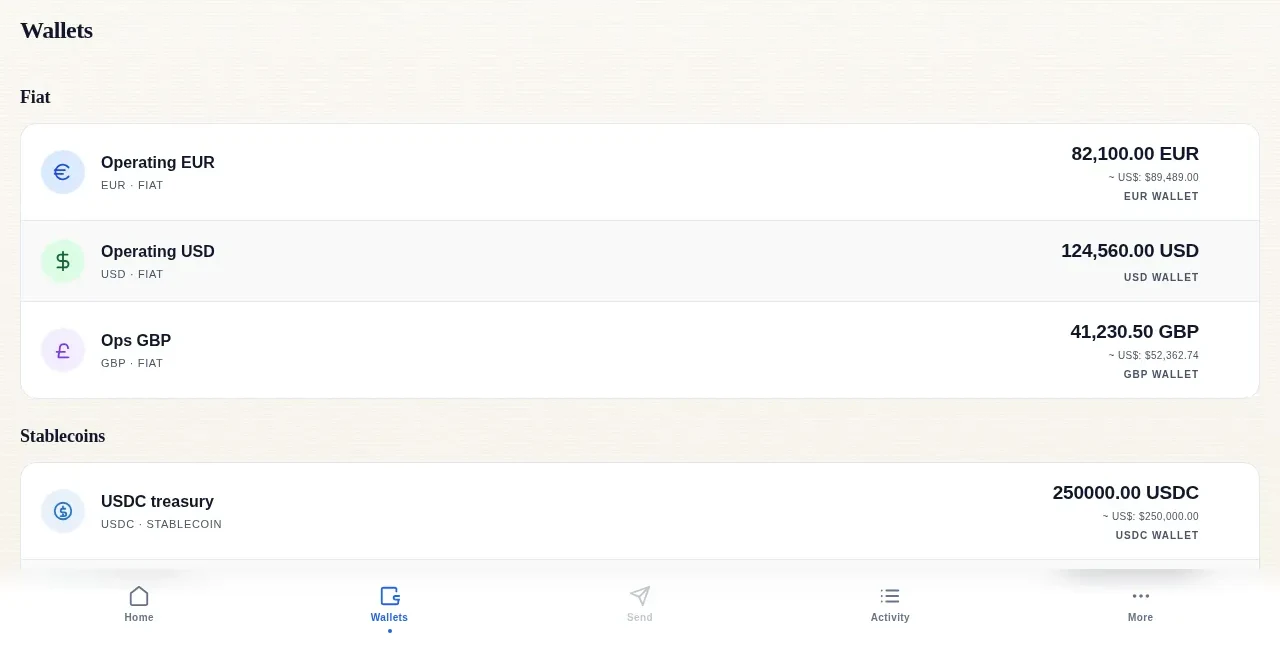
Every wallet the company holds, in each kind of money, on one screen.
 See it full size ↗
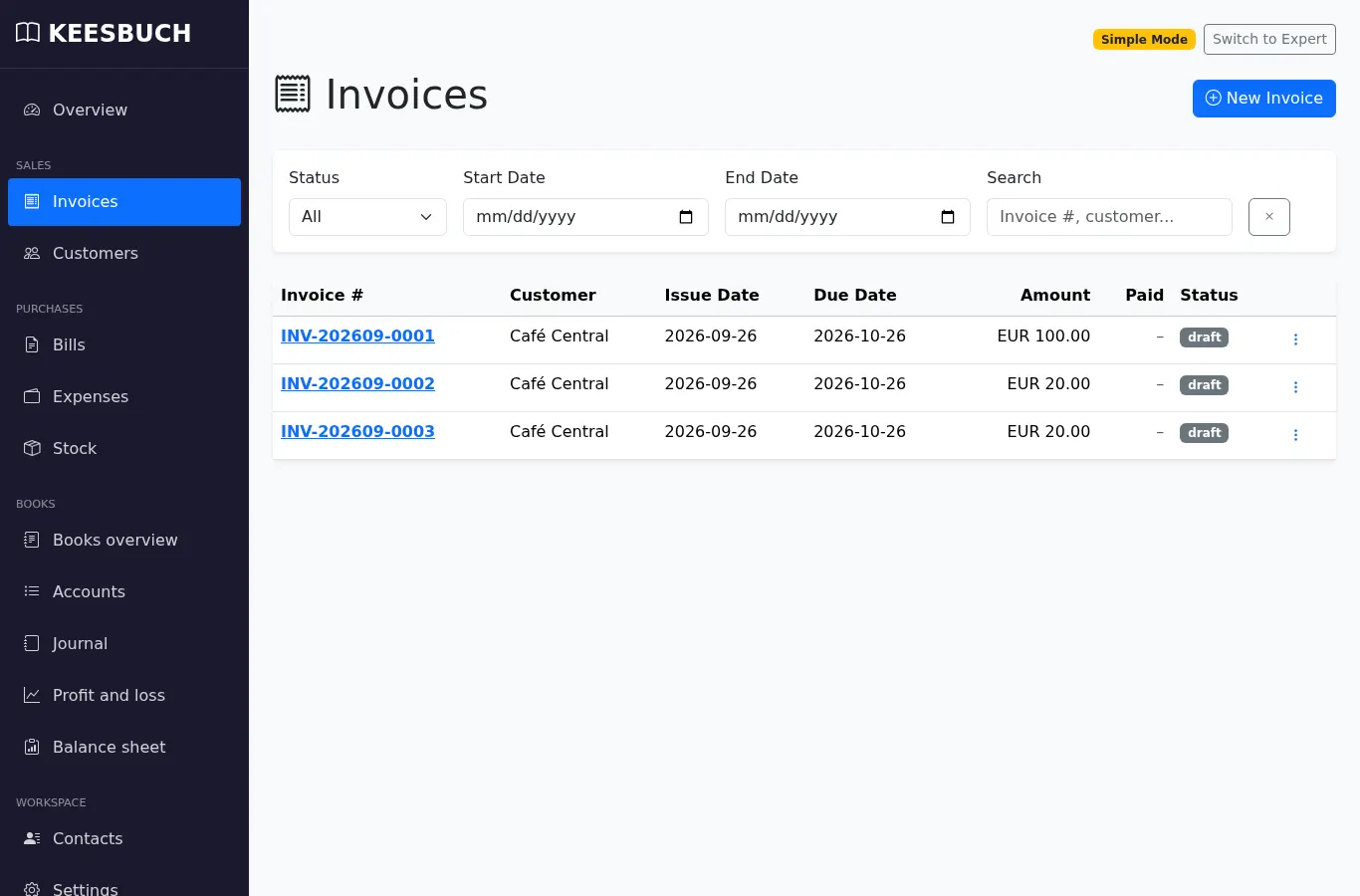
Every invoice with its customer, its dates, its amount and its status.
 See it full size ↗
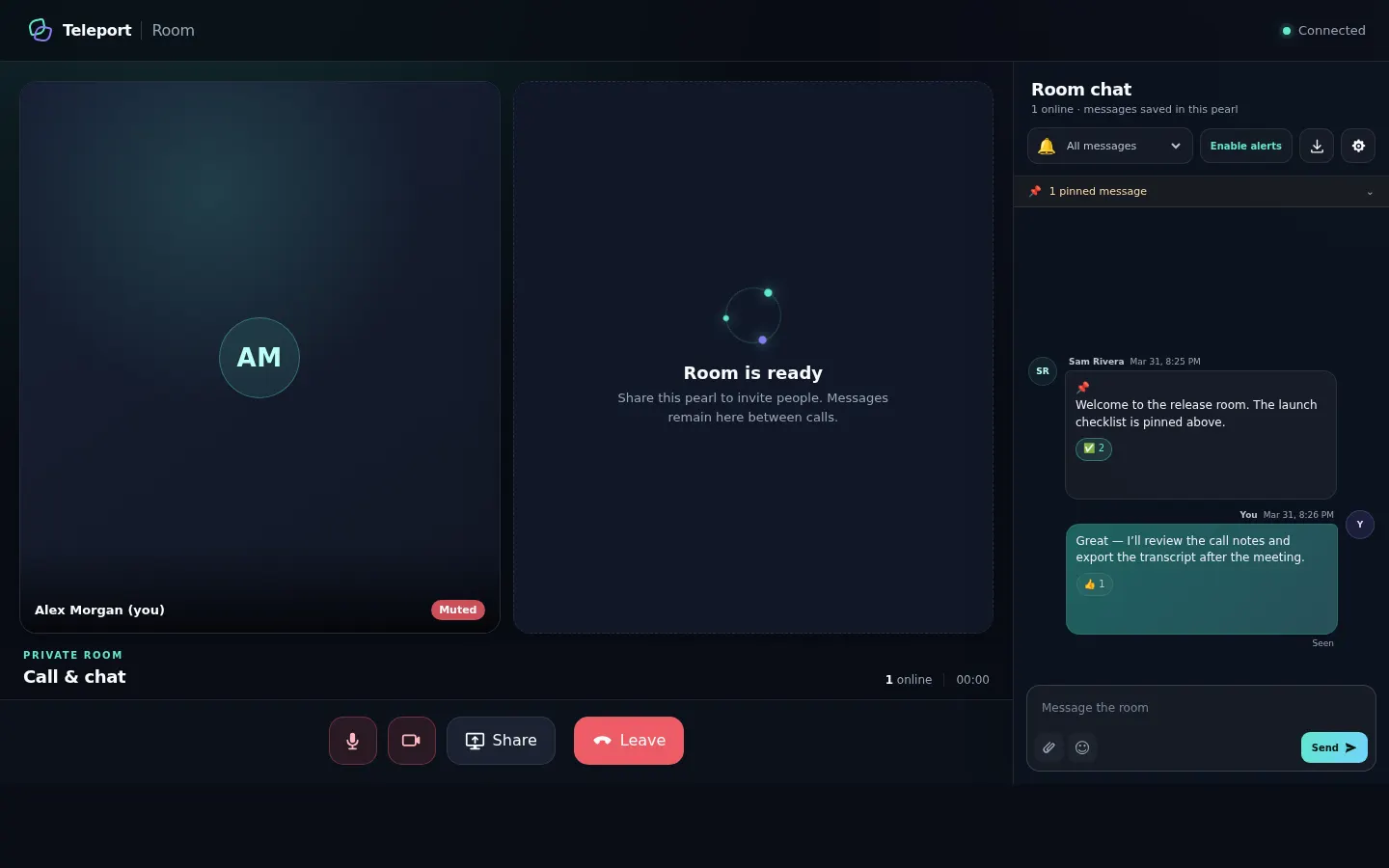
A meeting room for the team and its clients, with the conversation kept beside it.
 See it full size ↗
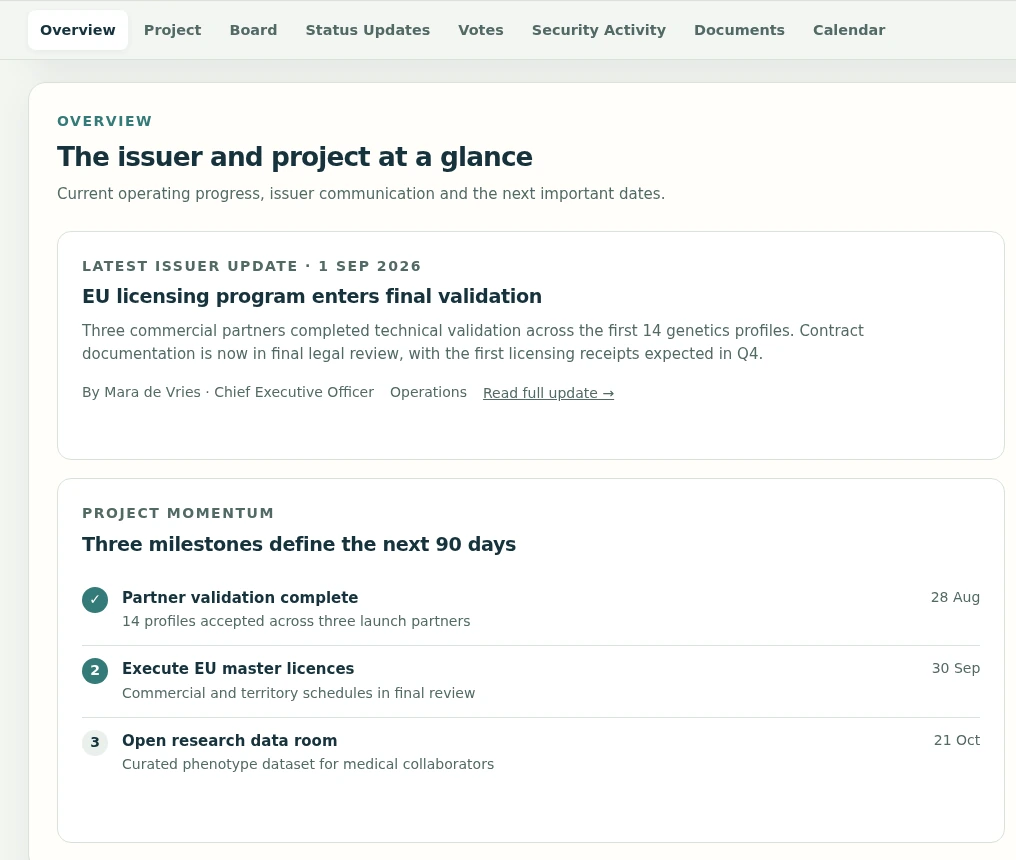
An example investor room: the latest update and the dates ahead, in one place the company controls.
 See it full size ↗
A company that runs Melusina gets its full source code, so what the software does can be checked rather than believed. Signed releases and authority records let an operator check the version and its approval. The source policy provides for a three-year transition to open source, release by release; the license supplied with each release states its terms.
Setting a company up, running its daily work, handling its money and raising it.