The investor room.
One private room for the documents, the questions and the answers, open only to the investors the company invites.
HRBR runs a company’s fundraise: the investor room, the documents, the updates and the list of who owns which shares — with the company in charge throughout. We call this service Sails.to.
Documents go out as attachments. Questions come back in five threads. Signed papers end up in different inboxes, and the list of who owns what is rebuilt by hand afterwards. When the round closes, the relationship with the investors is scattered across people’s mailboxes, and the next round starts from nothing.
One room for the round, and the same room for the years that follow.
One private room for the documents, the questions and the answers, open only to the investors the company invites.
After the round, the same room carries the company’s updates, its meetings and its shareholder votes.
When money comes in and shares go out, the list of who owns which shares is updated as part of the same step, and sealed on a blockchain so nobody can quietly rewrite it.
The investors’ room sits beside the company’s official record and its payments, so the share list, the papers and the money always tell the same story.
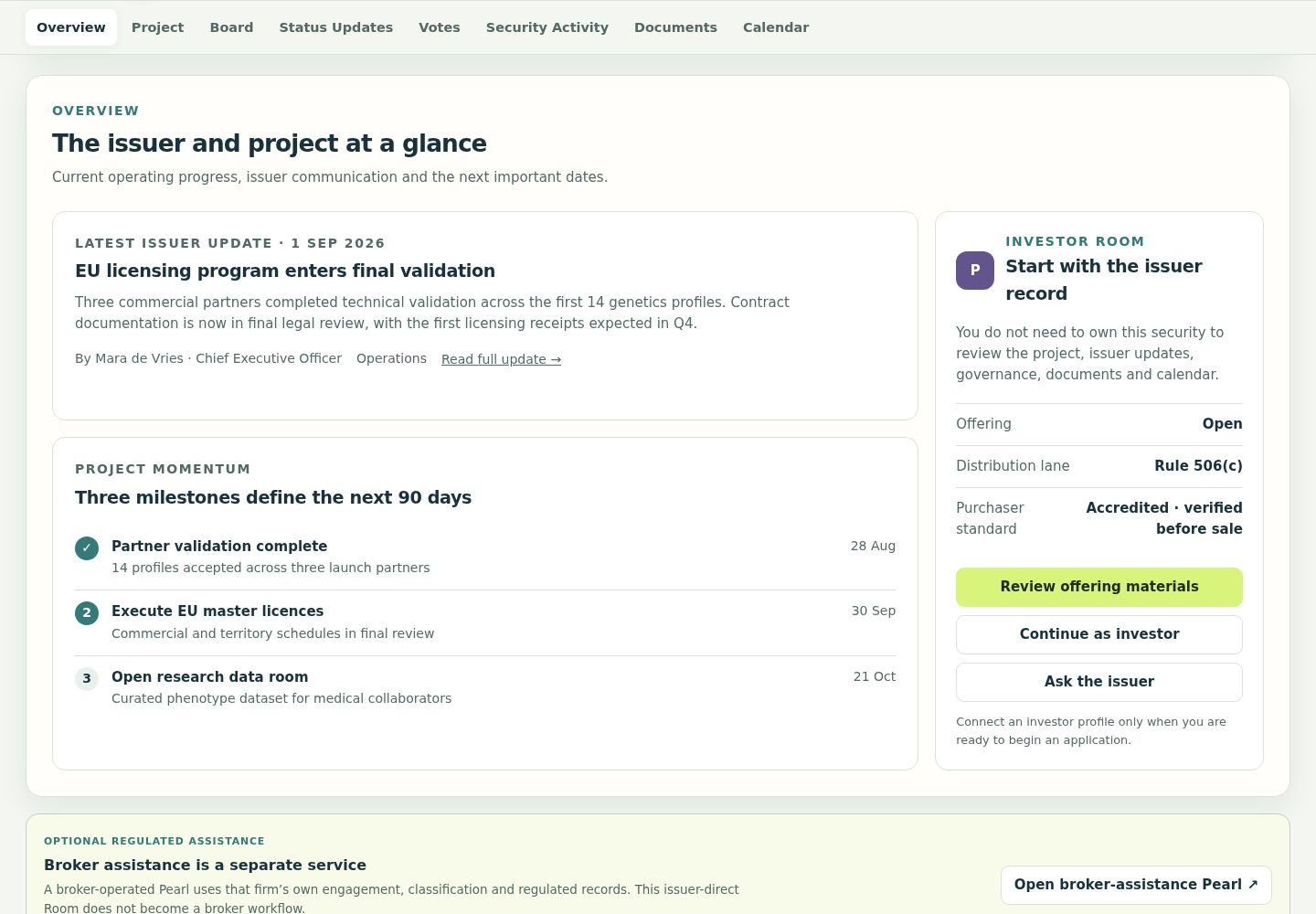
The latest update, the next three dates, and the papers an investor needs — in one place the company controls.
The investor room, shown with a demonstration company.
 See it full size ↗
No. You bring your investors. We give you the room, the papers and the share list.
No. We never hold the money. The room records what was agreed and what was paid.
Your own lawyers and, where the law calls for them, an approved broker and the keeper of the share list. Each does their own part, and the room keeps the parts together.
The company does. The room and the record belong to the company, not to us.
Tell us roughly when you plan to raise, and from how many investors. We are taking on our first fundraises during 2027.
Tell us roughly when, and how many investors, and we will show you the room.